Why AI companies still hire people
The work people do inside AI companies can tell us more than the number of jobs they advertise.
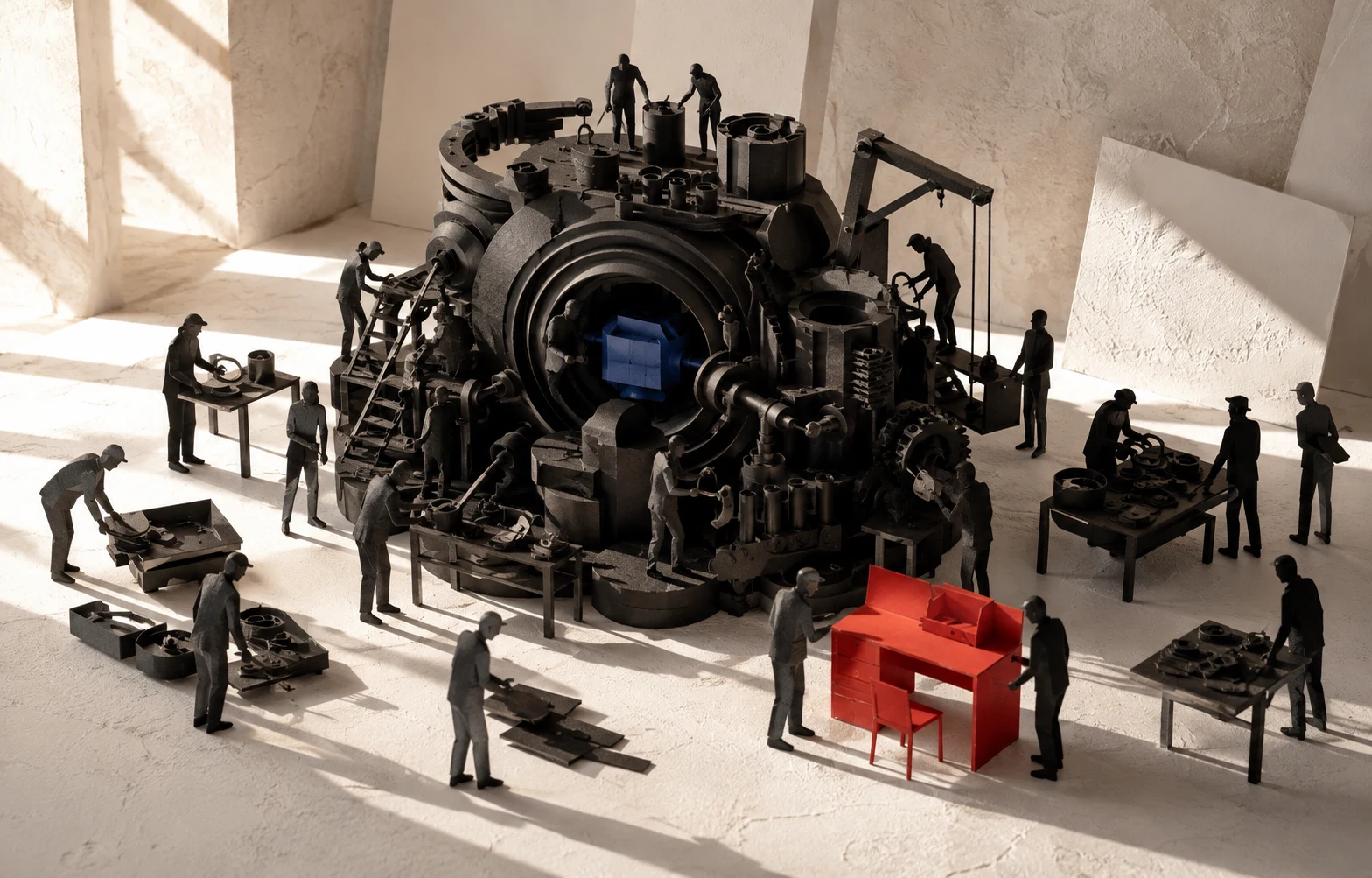
The companies building AI still need people to build the business around it. That is the part of the automation story I keep coming back to.
I want to know what those people do. A headcount tells me less than the work behind it.
Someone still has to build the product
Researchers improve the models. Engineers build the infrastructure. Safety teams red-team the models, testing how they fail. Product teams work out what customers need.
Then there is the work of selling the product, integrating it into a business, and supporting the people who use it.
Some of those tasks can be automated too. The question is what happens to the work as a whole.
Faster work can mean more work
If a task becomes cheaper, a business can afford to do more of it. A report that once took a day may become something a team produces every week.
That can create demand for other work: checking the result, explaining it, or deciding what to do next. It can also reduce the number of people needed for the original task.
I want to understand which of those things is happening before treating automation as a verdict on employment.
The transition is the hard part
New jobs existing somewhere else does not mean they are accessible to the person who lost work. Different skills, different locations, and the cost of retraining all matter.
That is why hiring at AI companies is useful evidence to examine, but cannot settle the question for the whole economy.
I remain interested in what the tools make possible. The next question is whether people can make the transition to the work that follows.
Look at what AI companies need people to do. That is where the hiring story gets useful.
Ask Fred about this piece.
Ask the AI guide about this article, or write to me directly.